


When learning Reiki, there are countless options of lineages and teachers to study from. After Mikao Usui founded Usui Reiki Ryōhō Gakkai in 1922, many of his students naturally interpreted his teachings in their own ways. Over the decades, these teachings adapted to the cultures and times in which they were practiced.
In the West, Reiki spread through Mrs. Hawayo Takata, who brought the practice from Japan to Hawaii in the late 1930s and later to the mainland U.S. Teachers such as Phyllis Lei Furumoto, Paul Mitchell, and William Lee Rand helped Reiki grow and flourish in new communities. Along the way, some lineages blended Reiki with other healing modalities such as shamanism, crystal healing, or sound therapy.

In Japan, Reiki traditions carried forward through the Usui Reiki Ryōhō Gakkai and teachers like Hiroshi Doi (founder of Gendai Reiki Hō) and Tadao Yamaguchi (Jikiden Reiki). While each teacher’s interpretation may differ, Japanese Reiki tends to place a strong emphasis on spiritual practice, meditation, and daily integration.
In this post, I’ll share some of the key differences between Eastern and Western Reiki. My hope is that this highlights the richness of both perspectives, not to create division. Reiki is ultimately about connection—with ourselves, with life force energy, and with one another.
One of the main differences you’ll notice is the emphasis of practice.
Both approaches are meaningful. Hands-on healing in the West often becomes meditative in itself, while in the East, meditation creates the foundation for hands-on healing.
In the West, many people discover Reiki as a healing treatment. It may be offered in wellness centers, hospitals, or private sessions—similar to massage therapy or acupuncture. Many students also choose Reiki training with the intention of becoming practitioners for others.
In Eastern Reiki traditions, Reiki has often been practiced as a way of life. Students learn Reiki not only to support others but to care for their own body, mind, and spirit. Self-practice and daily cultivation are at the center, with treatments for others being a natural extension.
Neither path is better than the other. It’s simply a different emphasis: Reiki as a tool for healing others, and Reiki as a practice of personal transformation.
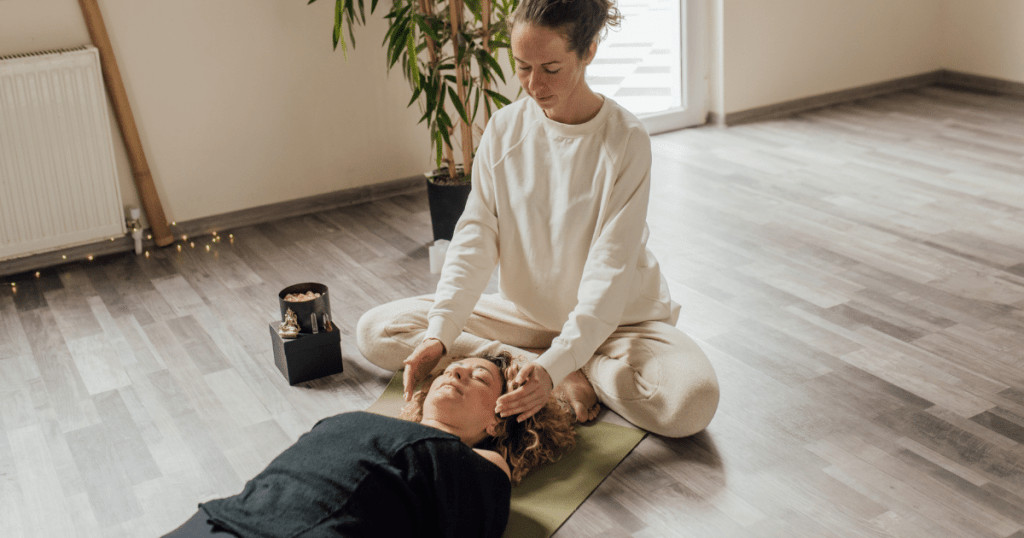
How Reiki is passed from teacher to student also varies.
The philosophy behind this is that Reiki unfolds gradually. Rather than a single moment of awakening, the practice ripens with ongoing guidance, much like watering a plant.

In the West, people often look to Reiki for results. We might measure the success of a session by the sensations felt, the release of emotions, or the physical improvements noticed afterward. Sessions can be fascinating and even life-changing in this way.
In Japanese Reiki, the focus is more on cultivating presence and inner peace. The goal is often described as anshin ritsumei—a state of being content no matter what life brings. Reiki is not only about what happens during a session but how you live afterward: the peace you carry, the kindness you extend, the calmness of your mind.
Both perspectives remind us that Reiki supports us—whether through immediate shifts or through the gentle unfolding of peace over time.

Another difference lies in how intuition is approached.
Neither is right or wrong—it depends on the practitioner, the lineage, and what feels aligned with their natural gifts.
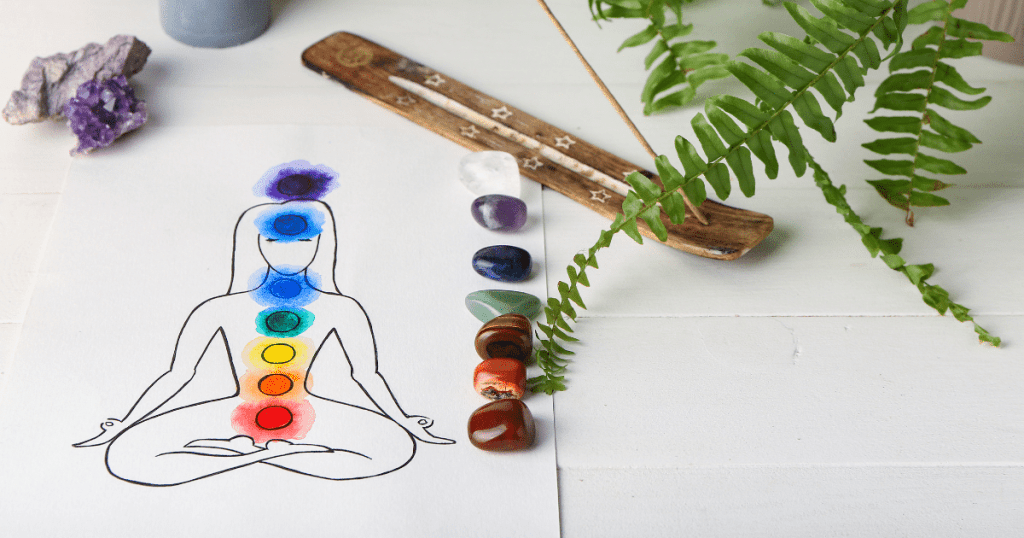
Energy anatomy is taught differently in East and West.
While they look different on the surface, both chakras and tandens help us understand the subtle flow of energy within us. There are many parallels are similarities between these philosophies.
Symbols are also understood in unique ways.
In the West, Reiki is often taught in three levels: Reiki I, Reiki II, and Reiki Master/Teacher. Certificates are milestones, and students often see them as progress markers on their path.
In Japanese traditions, progression is less about certification and more about practice. Attunements are seen as openings, but the real deepening comes from daily commitment to Reiki. The Precepts, meditation, and reiju remain central throughout one’s life, not just during training.
Although these differences stand out, both Eastern and Western Reiki flow from the same source: the teachings of Mikao Usui.
Both honor the universal life force that supports us. Both value the Reiki Precepts. Both offer tools to find balance, reduce stress, and cultivate compassion. And both remind us that Reiki is not only about healing sessions—it’s about how we live our lives.
Reiki is not about choosing the “right” lineage. It’s about following what resonates with your heart. Some people feel deeply called to the hands-on-healing and intuitive practices of Western Reiki. Others resonate with the meditation and daily cultivation of Japanese Reiki. And many find value in exploring both.
There is no one way to practice Reiki. What matters is that it brings you back to yourself, to presence, and to love.
As Usui-sensei taught through the Reiki Precepts:
“Do not anger, do not worry, be grateful, do your duties, be kind.”



Parita intuitively connects with clients around the world to share reiki and chakra balancing. In a 60 minute call, you can discuss and clear energetic blocks that may be holding you back from physical, mental, emotional and spiritual wellbeing. Allow her to support you in awakening to your true light.


I’ll be honest, I am usually quick to delete most emails in my inbox but this one was different. I received my Reiki master certificate this year. This article showed me that I am really drawn to the Eastern approach vs. the Western approach. I have done a ton of reading and research but this article definitely cemented in my mind what I was looking for in moving through the training. I even began identifying the various symbols and how they are pictured depending on the lineage. Are there resources available that delve deeply into the Eastern philosophy of Reiki that are available in English, as opposed to Western teachers writings? This was a really wonderful article. Thank you so much for sharing this information!
Hi Jeri-Lyn! I’m glad this article spoke to you. For more on Japanese Reiki, you can check out some of the books by Hiroshi Doi, Nicholas Pearson, and Frans Stiene. Reiki blessings, Parita